
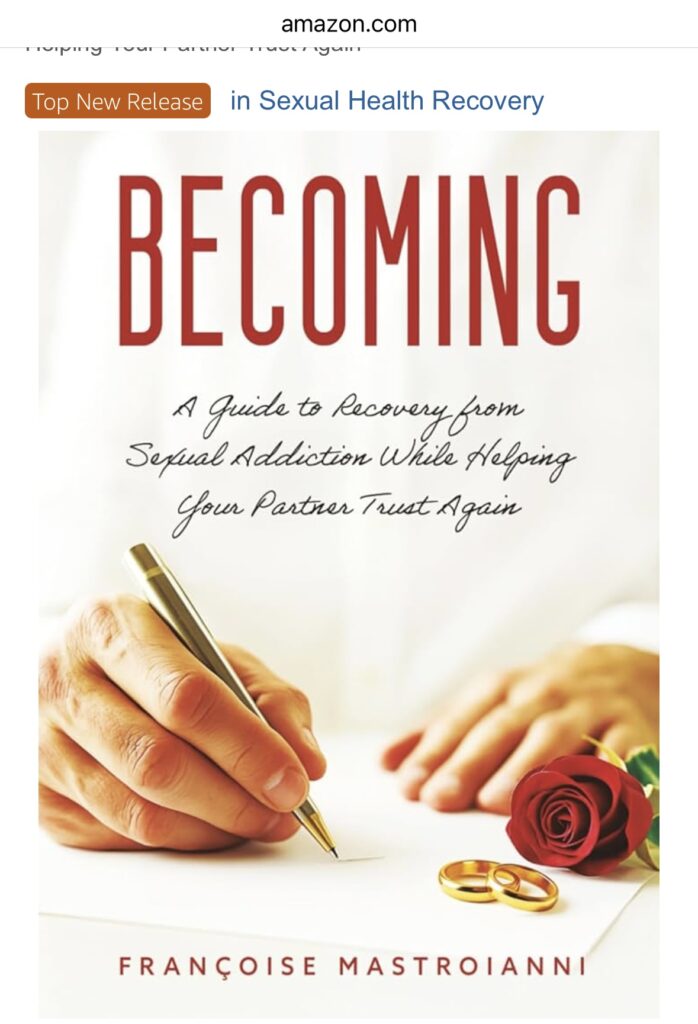
“Becoming real requires tolerating discomfort even when your natural inclination is to quit.”
The History and Philosophy of Your Emotions
The exercise on this page is meant to help you understand where some of your feelings and thoughts originate. Few of us grew up in homes where we were encouraged to feel and sit in our emotions, explore how they show up, and talk about them. But before we could express ourselves in words, as infants and toddlers, we spoke the language of feelings. We were capable of experiencing happiness, fear, sadness and anger. Studies tell us that children in orphanages who are not touched and loved by loving caregivers grow up avoiding touch and are fearful and unaware of their own feelings. Not only does it affect their emotional development, but it also impacts their physical and mental development. While you may not have been born in an orphanage, perhaps your emotional development was delayed because of addiction. Traumatic events, as well as addictive substances, can stunt natural emotional development and derail the limbic system that is responsible for processing our emotions. Some of us are acting and responding out of immature, underdeveloped brains.
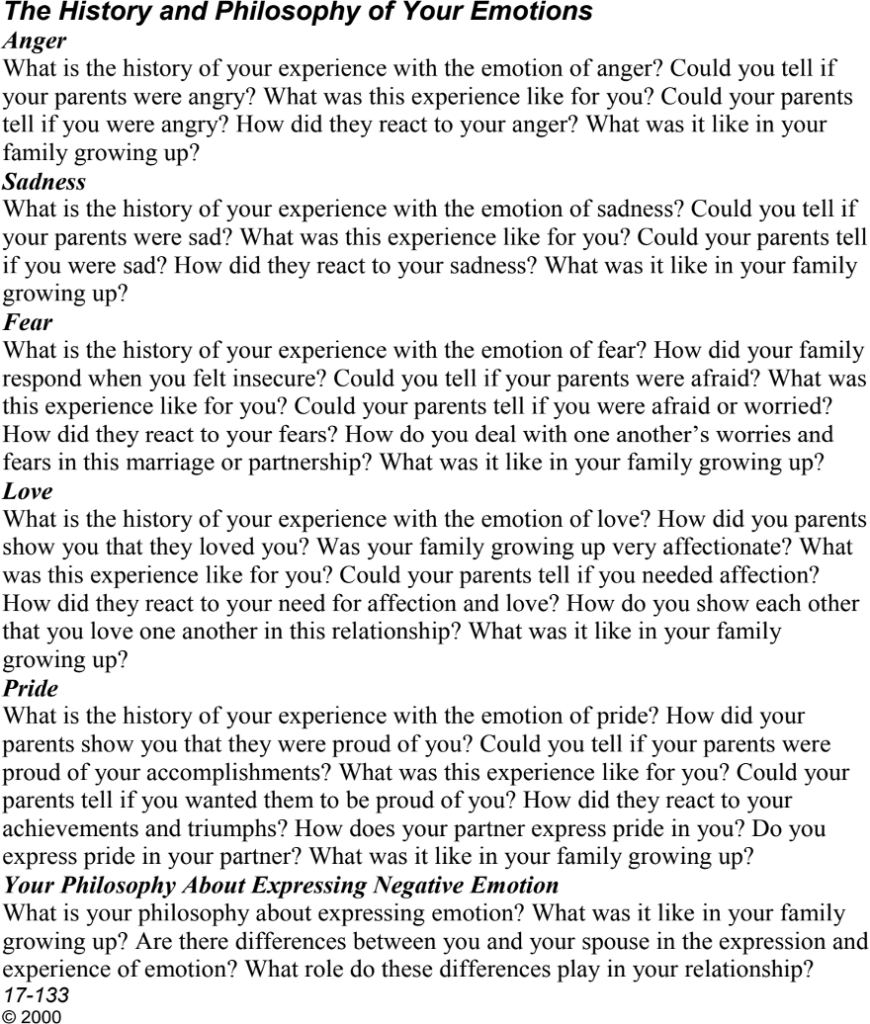
The following handout is a John Gottman original and was permitted to be used in my workbook, Spouses of Sex Addicts: Hope for the Journey Workbook.[1] [DR1] Please take the time to think through the questions below in “The History and Philosophy of Your Feelings.” Feel your way through your feelings and hang out with them to become familiar with them, as these provocative questions stimulate feelings that we sometimes want to avoid. Feelings are what they are, and yet we don’t need to act on all of them. Try practicing radical acceptance, it does not mean we have to like or approve of our emotions, but the key is not to judge our feelings. Addressing these basic feelings and learning more about how you maneuvered and managed your life through some painful life experiences will give you a greater insight into some unwanted behaviors.
Spouses of Sex Addicts: Hope for the Journey Workbook
Booklogix,2013
Copyright 2000-2009 by Dr. John M Gottman and Dr. Julie Schwartz Gottman. Distributed under license by the Gottman Institute, Inc. (17-31)
This info came from my training manual and with permission to use in my workbook.