Few of us grew up in homes where we were encouraged to feel and sit in our emotions, explore how they show up, and talk about them. It’s important for us to understand where some of our feelings and thoughts originate.
Before we could express ourselves in words, as infants and toddlers, we spoke the language of feelings and could experience ranges of emotions from happiness and joy to fear, sadness, and anger. Studies tell us that children in orphanages who are not touched and cared for by loving caregivers grow up avoiding touch and are fearful and unaware of their own feelings. Their experience in these formative years goes on to affect their emotional, physical, and mental development throughout their life. While you may not have been born in an orphanage, perhaps your emotional development was delayed because of trauma or addiction. Traumatic events, as well as addictive substances, can stunt natural emotional development and derail the limbic system that is responsible for processing our emotions. Some of us are acting and responding out of immature, underdeveloped brains.
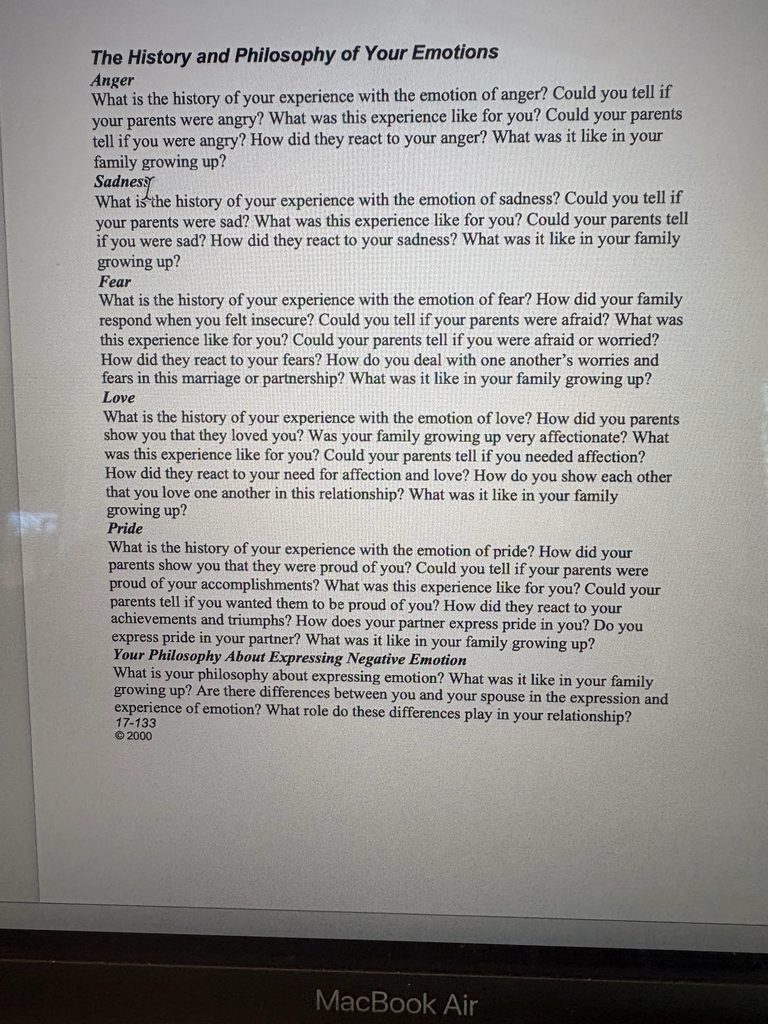
To better understand your emotions and your own philosophy behind them, in his book What Makes Love Last?, John Gottman walks you through a series of questions for several different emotions—encouraging you to dig deep and be honest with yourself about the way certain emotions show up in your life. Gottman encourages you to feel your way through your feelings and hang out with them to better understand yourself.
I really like this particular handout from John Gottman